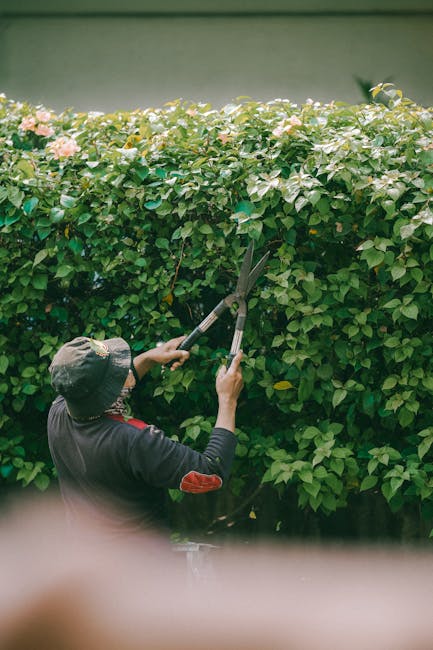
Camberwell Green guide to local gardeners and pricing
If you're trying to make sense of local gardening help around Camberwell Green, you're not alone. One person wants a tidy front garden before a family visit, another needs a one-off clear-up after a wet winter, and someone else just wants a reliable gardener who won't turn a simple job into a mystery novel. This Camberwell Green guide to local gardeners and pricing is here to make the whole thing easier to judge, compare, and book with confidence.
In practical terms, the right gardener can save you time, prevent costly mistakes, and keep your outdoor space looking cared for rather than patched together. Pricing, though, is where many people get stuck. Why is one quote so much higher than another? What should be included? And how do you know whether you're paying for proper skill or just someone with a mower and a van?
Below, you'll find a clear breakdown of how local gardening services typically work, what affects pricing, what to ask before you book, and how to avoid the usual traps. It's written for real households, real gardens, and real budgets. No fluff, no mystery, just useful guidance.
Table of Contents
- Why Camberwell Green guide to local gardeners and pricing Matters
- How Camberwell Green guide to local gardeners and pricing Works
- Key Benefits and Practical Advantages
- Who This Is For and When It Makes Sense
- Step-by-Step Guidance
- Expert Tips for Better Results
- Common Mistakes to Avoid
- Tools, Resources and Recommendations
- Law, Compliance, Standards, or Best Practice
- Options, Methods, or Comparison Table
- Case Study or Real-World Example
- Practical Checklist
- Conclusion
- Frequently Asked Questions
Why Camberwell Green guide to local gardeners and pricing Matters
Camberwell Green has the kind of mixed residential gardens that can look effortless when they're well kept and slightly overwhelming when they're not. Some homes have compact front spaces with stubborn paving weeds. Others have shared back gardens, mature shrubs, borders that have gone a bit feral, or lawns that need regular attention just to stay presentable. That means there is no one-size-fits-all answer to gardening costs.
Understanding local gardeners and pricing matters because the cheapest quote is not always the best value, and the most expensive quote is not automatically the best quality. Truth be told, most people don't need an elite landscape overhaul. They need someone dependable, punctual, and clear about what they're charging for.
It also matters because garden work changes with the seasons. Spring tidy-ups, summer maintenance, autumn leaf clearance, and winter pruning all demand different levels of labour and equipment. If you hire without understanding the basics, you can easily end up overpaying for a simple visit or under-scoping a bigger job that should have been planned properly.
For that reason, a good local guide helps you make smarter decisions before a spade ever touches soil. If you want to explore the wider range of work that can be covered, the services overview is a useful place to start.
How Camberwell Green guide to local gardeners and pricing Works
At a simple level, local gardening services usually begin with a request, followed by a discussion of the garden's size, condition, and priorities. After that, the gardener may offer a visit, a phone-based estimate, or a written quote depending on the job. That's the basic flow, but the details matter. A lot.
Pricing normally depends on labour time, garden access, waste removal, tools required, and whether the task is one-off or ongoing. A neat small garden that just needs regular mowing will usually be priced differently from an overgrown space that needs cutting back, clearing, and disposal in a single session. Makes sense, really.
Some jobs are billed by the hour, while others are quoted as a fixed price for the whole task. Hourly pricing can work well for maintenance and flexible jobs. Fixed pricing is often better for clear, defined tasks such as hedge trimming, end-of-tenancy tidy-ups, or a seasonal clearance. The best option depends on what you need and how easy it is to define the scope.
One thing people often miss: the quote should reflect the real condition of the garden, not the optimistic version of it in your head. We've all been there. The garden "just needs a quick tidy" until you stand outside in the cold and realise the ivy has become ambitious.
If you want a straightforward way to compare estimates, the pricing and quotes page can help you understand how to approach that conversation in a calmer, more informed way.
Key Benefits and Practical Advantages
Working with a local gardener brings a few practical advantages that are easy to underestimate until you've experienced the difference.
- Faster response times: Local gardeners can often fit in assessments and repeat visits more efficiently.
- Better local understanding: They're more likely to know the seasonal pressures, common garden issues, and typical property styles in the area.
- More suitable scheduling: Regular maintenance can be arranged around your routine instead of forcing you to plan weeks ahead.
- Lower risk of mismatch: A local professional is more likely to understand the scale and type of work common to nearby homes.
- More transparent communication: It is usually easier to arrange a visit, clarify scope, and handle follow-up.
There's also a very real quality-of-life benefit. A tidy garden changes how a home feels. You notice it on a Monday morning when you step outside with a cup of tea and the space looks ordered instead of nagging at you. Small thing, big effect.
From a budgeting point of view, regular care can also prevent larger restorative jobs later. A bit of pruning done on time is usually far cheaper than dealing with neglected growth that blocks light, spreads into pathways, or makes other work harder.
If you value sustainability as well as appearance, it's worth looking at how green waste is handled and whether clippings, branches, and other materials are managed responsibly. The recycling and sustainability approach is relevant here because disposal choices can affect both cost and environmental impact.
Who This Is For and When It Makes Sense
This guide is useful if you're a homeowner, landlord, tenant, property manager, or simply someone who wants a cleaner-looking outdoor space without taking on the work yourself. It's also helpful if you're comparing a one-off visit against a scheduled maintenance plan and trying to work out which makes more sense financially.
It tends to be especially useful in a few situations:
- You've inherited a garden that needs a reset after months of neglect.
- You want weekly or fortnightly help but don't know what a fair rate looks like.
- You need help before a sale, letting inspection, family gathering, or event.
- You're comparing several local gardeners and the quotes are all over the place.
- You want to avoid hiring someone who is vague about what's included.
If you already know you need a broader service package, it may help to review the services overview before requesting pricing. That way you can match the job to the right type of support instead of guessing.
Not every garden needs a big intervention. Sometimes the sensible move is a small, regular plan. Sometimes it really is a one-off clear-out. The key is choosing based on the garden, not on habit or wishful thinking.
Step-by-Step Guidance
Here's a practical way to approach hiring local gardening help without making it harder than it needs to be.
- Define the job clearly. List what you actually want done: mowing, weeding, hedge cutting, leaf clearance, border tidying, planting, or waste removal.
- Take a few photos. Good photos save time and reduce confusion. Try to capture the full area and any awkward spots.
- Decide whether you want one-off or ongoing work. This affects both pricing and scheduling.
- Ask how the quote is calculated. Is it hourly, fixed, or dependent on a site visit? Clear answer, please.
- Check what's included. Tools, labour, disposal, and follow-up can all change the final cost.
- Confirm timing and access. A blocked side path, a locked gate, or limited parking can affect the job day more than people expect.
- Review payment terms. Make sure you understand when payment is due and what methods are accepted.
A good quote should reduce uncertainty, not create it. If you finish the conversation more confused than when you started, that's a signal to ask more questions.
For many people, the easiest next step is to gather the job details and use the company's contact page to request an estimate. Simple is usually best.
Expert Tips for Better Results
Little choices make a surprisingly big difference with garden work. Here are some practical tips that tend to improve both results and value for money.
- Group tasks together where sensible. If you already need mowing, weeding, and hedge shaping, bundling them can be more efficient than arranging separate visits.
- Be honest about access. Steep steps, narrow side passages, or no nearby parking can all add time. Better to say it upfront.
- Ask for clarity on waste. Green waste removal can be a meaningful part of the job, especially after a big cutback.
- Think seasonally. Regular maintenance is often less stressful and less expensive than emergency catch-up work after a long gap.
- Prioritise the work that protects the garden first. For example, clearing blocked gutters from overhanging plants or cutting back growth from paths can matter more than cosmetic tidying.
One tiny but useful habit: walk the garden before the gardener arrives and jot down anything that's changed. A broken trellis, a patch of hidden debris, or a neighbour's overhanging branch can affect the job. It sounds obvious. People forget all the time.
If you're thinking ahead to safety and site conditions, it can also help to review the insurance and safety information so you know what good practice should look like before the first visit.
Common Mistakes to Avoid
Most problems with gardening quotes are avoidable. They usually come down to vague communication, unrealistic expectations, or assuming all jobs are the same. They're not.
- Choosing only on price. The cheapest quote can become expensive if the work is rushed, incomplete, or poorly scoped.
- Not defining the job. "General tidy-up" means different things to different people. Spell it out.
- Ignoring waste disposal. A low quote may exclude clearance, which then shows up later as an extra charge.
- Forgetting recurring needs. A garden that grows fast may need maintenance rather than a one-off visit.
- Not checking practical details. Access, parking, pets, water supply, and locked gates all affect how smoothly the job runs.
Another common one is booking the first person who sounds confident. Confidence is nice, but clarity is better. A gardener who gives a measured explanation of what's included usually earns trust more quickly than someone promising miracles in ten minutes flat. Let's face it, gardens rarely cooperate with miracle language.
Tools, Resources and Recommendations
You do not need to become a gardening expert to manage the process well, but a few simple tools and habits make everything easier.
- Phone photos: Useful for quoting and for recording the garden's condition before and after work.
- A short written brief: Even a few bullet points help avoid crossed wires.
- A rough budget range: Knowing what you're comfortable spending keeps the conversation practical.
- A calendar reminder: Handy for seasonal work like autumn leaf clearance or spring tidy-ups.
- A note of priorities: If you can only do three things this month, decide what they are.
For broader decision-making, some readers also like to compare service scope against the company's pricing and quotes guidance and then review how the team presents its work via the about us page. That combination can give a clearer sense of both value and working style.
If you care about responsible disposal, think about whether clippings can be recycled, composted, or handled in a way that keeps waste to a minimum. It's not glamorous, but it matters.
Law, Compliance, Standards, or Best Practice
Garden maintenance is not usually a heavily regulated service in the way some trades are, but that does not mean standards are unimportant. In fact, good practice is where trust is built.
For a start, a professional gardener should be clear about safety on site, careful with tools, and sensible around hazards like uneven ground, broken paving, hidden glass, thorny growth, and electrical equipment. If chemicals or treatments are used, they should be handled responsibly and in line with product guidance. No drama, just care.
Insurance is another major trust signal. If someone is working on your property, it is reasonable to expect them to have appropriate cover and to explain how they manage risk. That does not mean every job is dangerous, of course, but even simple outdoor work benefits from clear boundaries and sensible precautions.
Payment clarity matters too. You should understand when payment is due, what happens if the scope changes, and how any dispute would be handled. The payment and security information is worth checking because good payment handling is part of a professional service, not an afterthought.
There are also general best-practice expectations around waste handling, respectful behaviour, and honest quoting. If a quote seems vague, the correct response is usually to ask more questions, not to hope for the best and cross your fingers. That approach is rarely charming in hindsight.
For readers who value transparency, it can also help to look at the company's published policies, including the terms and conditions and the health and safety policy. Those pages are useful because they show how the service thinks about risk, responsibility, and customer expectations.
Options, Methods, or Comparison Table
Different gardens need different approaches. A quick comparison can help you choose the most sensible option for your situation.
| Option | Best for | Pricing style | What to watch for |
|---|---|---|---|
| One-off tidy-up | Overgrown or neglected spaces | Usually fixed quote or estimated labour time | Waste removal and scope creep |
| Regular maintenance | Lawns, borders, hedges, and repeat care | Often hourly or recurring visit pricing | Frequency of visits and seasonal changes |
| Seasonal service | Spring reset or autumn clearance | Task-based quote | Depth of work and disposal charges |
| Mixed support | Gardens needing both maintenance and restoration | May combine fixed and variable pricing | Clear boundaries between included tasks |
In practice, many households end up with a mix. For example, a regular mow in the warmer months and a bigger cutback at the start of autumn. That is perfectly normal, and often the most cost-effective way to keep things under control.
If you are unsure which route fits your garden, start by reviewing the wider service range so you can match the work to the job rather than forcing the job into the wrong box.
Case Study or Real-World Example
Imagine a typical Camberwell Green side return garden: not huge, but a bit unruly after a busy few months. The lawn has thinned, weeds have crept into the borders, and a hedge is leaning into the path enough to make everyone duck without thinking. The owner wants it sorted before visitors arrive at the weekend.
A sensible gardener would usually break that into parts: cut back the hedge, clear the weeds, tidy the borders, mow or strim where needed, and remove the clippings. The quote would depend on how long the work takes, whether waste needs taking away, and whether anything awkward is hiding under the growth. Maybe there's a pile of old pots in the corner. Maybe there's not. You never quite know until you get there.
Now compare that with a different scenario: the same garden, but maintained every two or three weeks. The work becomes simpler, faster, and more predictable. The budget is easier to manage too. This is why regular maintenance often costs less over time than repeated rescue jobs. Less drama, more control.
The lesson is straightforward. Price is not just about the size of the garden. It's about condition, access, frequency, disposal, and how clearly the work has been defined. Once you see it that way, the quotes start making much more sense.
Practical Checklist
Use this checklist before you request or accept a quote.
- Have I defined exactly what I want done?
- Have I taken clear photos of the garden?
- Do I know whether this is a one-off job or ongoing maintenance?
- Have I checked whether waste removal is included?
- Do I understand whether the price is fixed or hourly?
- Have I mentioned access issues, parking, pets, or locked gates?
- Have I asked about insurance and safety arrangements?
- Do I know how payment works and when it is due?
- Have I reviewed the company's policies where relevant?
- Am I comfortable that the quote matches the actual scope of work?
Quick summary: a good gardening quote should feel specific, fair, and easy to understand. If it does not, keep asking questions until it does. That is not being difficult. That is being sensible.
Conclusion
Hiring a local gardener around Camberwell Green should feel practical, not puzzling. Once you understand how scope, frequency, access, waste, and seasonal demand influence pricing, it becomes much easier to judge what is fair and what is not. That clarity helps you choose a gardener who fits your garden, your timing, and your budget.
The best outcomes usually come from simple, honest communication: clear photos, a clear brief, and a clear quote. Nothing fancy. Just the sort of working relationship that leaves the garden better than you found it and the whole process feeling calm rather than chaotic.
If you are ready to take the next step, use the site's information pages to compare service details, check policies, and request the kind of quote that matches your actual needs. One good conversation can save a lot of back-and-forth later.
Get a free quote today and see how much you can save.
And if all you do today is get a little clearer on what your garden needs, that's still progress. Nice, steady progress. The best kind.
Frequently Asked Questions
How much do local gardeners around Camberwell Green usually charge?
Pricing depends on the size of the garden, the type of work, access, waste removal, and whether the job is one-off or regular. A tidy little maintenance visit is usually priced differently from a full clearance job. The fairest approach is to request a clear written estimate based on the actual scope.
Is it cheaper to book a regular gardener or a one-off visit?
Regular maintenance is often better value over time because the garden stays under control and tasks take less time. One-off visits can be cost-effective for a specific job, but heavily overgrown gardens may need more labour and disposal, which pushes the cost up.
What should be included in a gardening quote?
A good quote should explain the tasks included, labour expectations, waste removal, any extra charges, and whether the price is fixed or hourly. If anything feels vague, ask for clarification before booking. That saves awkwardness later.
Do gardeners bring their own tools?
Most professional gardeners do bring the tools needed for the agreed work, though you should confirm this in advance. It is sensible to ask whether specialist equipment is included, especially for heavier clearance or hedge work.
How often should a garden in Camberwell Green be maintained?
That depends on the garden's design, planting, and how quickly it grows. Some spaces need fortnightly or monthly attention in spring and summer, while others only need seasonal visits. A local gardener can usually suggest a practical rhythm once they've seen the space.
What affects the final price the most?
The biggest price drivers are usually labour time, garden condition, access, and waste removal. A neat garden with easy access is much simpler to price than a dense, overgrown space with limited entry and lots of cuttings to remove.
Should I choose the cheapest quote?
Not automatically. The lowest quote can be fine if the scope is clear and the service is reliable, but it can also mean important parts of the job are missing. It is usually better to compare like for like and look at clarity, not just cost.
What if my garden is very overgrown?
Be upfront about it. Overgrown gardens often need more time, more labour, and possibly more waste disposal. Good photos help, but a site visit may be the best way to get a proper price. It is better to be honest now than surprised later.
Can I ask for a fixed price instead of hourly pricing?
Yes, and for many clearly defined jobs that can be the better option. Fixed pricing gives you more certainty. Hourly pricing can work better for flexible maintenance work where the exact tasks may change over time.
Is garden waste usually removed as part of the job?
Sometimes yes, sometimes no. It depends on the quote. Waste removal can be a significant part of the cost, especially after pruning or clearing. Always check whether disposal is included rather than assuming it is.
How do I know if a gardener is professional and trustworthy?
Look for clear communication, sensible pricing, straightforward explanations, and documented policies where appropriate. You can also review the company's about us information, along with pages covering insurance and safety and terms and conditions. Those details help show how the service operates.
How should I prepare my garden before the gardener arrives?
Move fragile items, unlock access points, note any hazards, and make a quick list of priorities. If possible, give the gardener a clear view of the areas you want attention on. A little prep goes a long way, honestly.
What is the best next step if I want a quote?
Gather a few photos, decide what work you want done, and send a clear enquiry through the contact page. If you want to understand the service scope first, take a look at the services overview and the pricing and quotes guidance before you reach out.